Stop Hiding Inventory Problems Behind Safety Stock
Why More Inventory Is No Longer the Answer
In this article
- The hidden cost of safety stock
- Inventory distortion is the real problem
- Why traditional forecasting isn't enough
- From safety stock to continuous inventory intelligence
- What this looks like in practice
- The future belongs to smarter inventory
For years, retailers have treated safety stock as insurance. When forecasts were uncertain, lead times fluctuated, or shelves risked going empty, the solution was simple: add more inventory. It was intuitive. It was safe. And for a long time, it worked.
But in today's retail environment, that strategy is becoming dangerously expensive — and increasingly ineffective.
Excess inventory ties up working capital, increases markdown risk, consumes warehouse capacity, and often fails to solve the real issue behind poor availability. According to IHL Group, inventory distortion — the combined cost of overstocks and out-of-stocks — costs retailers globally over $1.77 trillion per year. Yet many retailers continue to respond to availability problems by simply stocking more.
Leading retailers are discovering that the answer is not more stock — it's better inventory intelligence.
The Hidden Cost of Safety Stock
Safety stock was designed to protect retailers from uncertainty. And it does — but at a price most companies underestimate.
Carrying costs typically account for 20–30% of inventory value per year, according to Gartner. That includes capital tied up in unsold goods, warehouse and handling costs, insurance, shrinkage, and the markdown risk that grows the longer inventory sits on shelves.
The deeper problem is that most retail uncertainty today is not caused by a lack of inventory. It's caused by a lack of visibility. A retailer may have sufficient inventory across its network and still experience:
- Out-of-stocks in high-demand stores
- Excess inventory in low-performing locations
- Inventory stranded in the wrong channels
- Delayed replenishment decisions
- Inaccurate inventory records
In these situations, increasing safety stock simply masks operational inefficiencies rather than fixing them. It's the retail equivalent of adding more water to a leaking bucket instead of finding the hole.
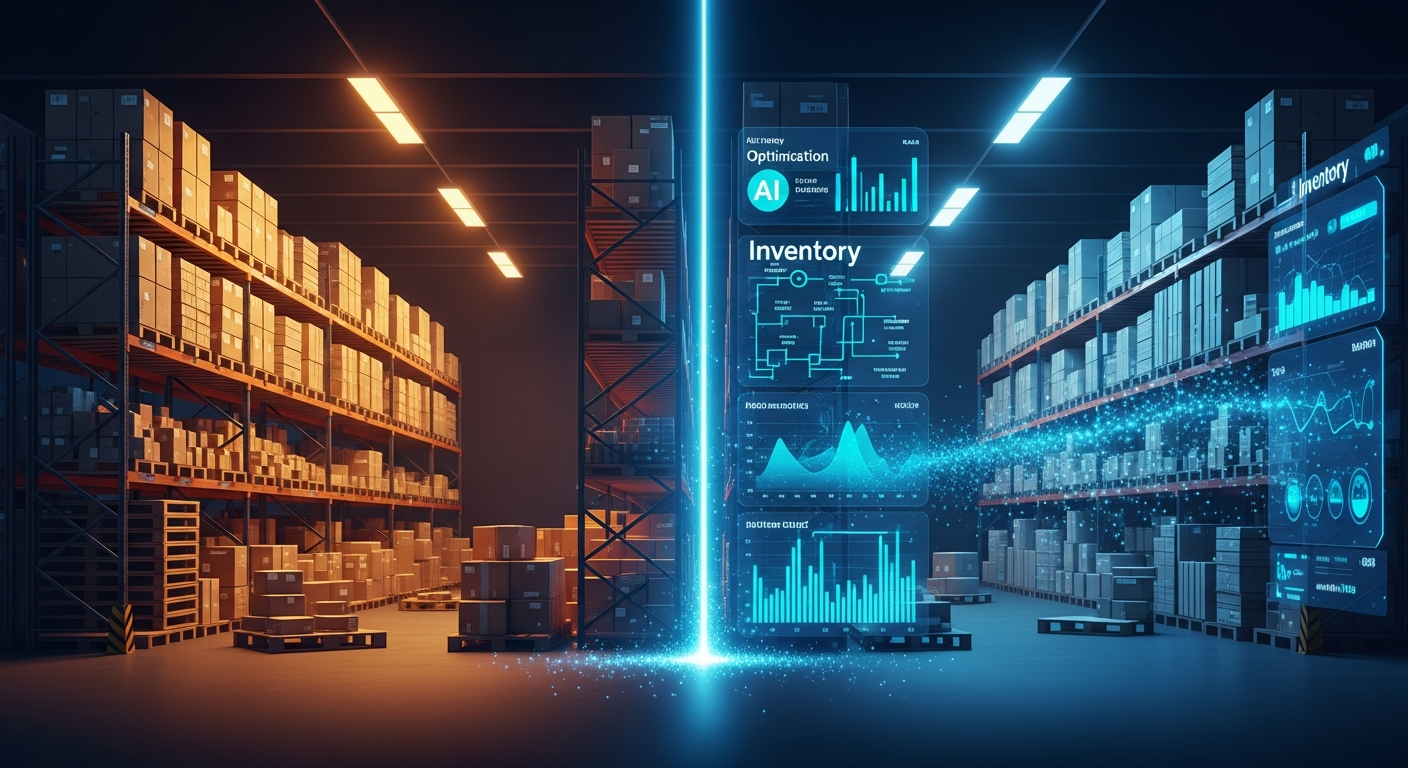
Full warehouses. Empty shelves.
Inventory Distortion Is the Real Problem
Many retailers assume they have an inventory shortage when they actually have an inventory allocation problem.
Inventory distortion occurs when inventory exists within the network but is unavailable where customers actually need it. A product sitting in a regional DC while a flagship store runs out is not a supply problem — it's a visibility and decision-making problem.
This can happen because of:
Poor store allocation decisions
Driven by outdated demand signals
Inaccurate inventory records
Caused by shrinkage, miscounts, or system lag
Phantom inventory
Items that appear available in the system but are physically missing or damaged
Slow replenishment cycles
Can't keep pace with demand shifts
Demand volatility
That traditional forecasts fail to capture in time
Research from Auburn University's RFID Lab found that average retail inventory accuracy hovers around 63% — meaning roughly one in three inventory records is wrong. When decisions are made on inaccurate data, no amount of safety stock can compensate.
Why Traditional Forecasting Isn't Enough
Many retailers still rely on forecast-driven inventory planning. While forecast accuracy matters, it is no longer sufficient on its own. Retail demand today is more volatile than any forecast model can fully anticipate.
Demand can shift rapidly because of:
Even a 95% accurate forecast is wrong 5% of the time — and in a high-SKU, multi-location retail environment, that 5% represents thousands of decisions every week.
The more important question is no longer:
"How can we forecast better?"
It's:
"How can we react faster when reality differs from the forecast?"
From Safety Stock to Continuous Inventory Intelligence
Leading retailers are shifting from static inventory buffers toward dynamic inventory optimization — a fundamentally different approach to managing availability.
This shift requires continuous, real-time visibility across five dimensions:
Inventory positions
What do we have, and where exactly is it?
Store-level demand signals
Where is demand building or softening today?
Allocation effectiveness
Is the right inventory at the right location?
Replenishment performance
Are restocks arriving on time and in the right quantities?
Inventory accuracy
Can we trust what our systems are telling us?
AI-powered inventory intelligence platforms can monitor these signals continuously and surface emerging risks before they become visible stockouts — often days or weeks in advance. More importantly, they can recommend corrective actions: reallocation between stores, emergency replenishment, demand-driven substitutions, or promotional adjustments.
What This Looks Like in Practice
Retailers who have made this shift report measurable results:
10–20% inventory reduction
While maintaining or improving service levels, freeing working capital from unproductive buffer stock
Improved in-stock rates
Driven by better allocation and faster replenishment decisions — not higher inventory volume
Reduced markdowns
As inventory is matched more precisely to where demand actually exists
Faster response to demand signals
With allocation decisions driven by near-real-time data rather than monthly planning cycles
The pattern is consistent: the retailers seeing the greatest improvements are not those carrying the most inventory — they are those with the best visibility into where their inventory is, where demand is heading, and how quickly they can move between the two.
The Future Belongs to Smarter Inventory
Retailers don't win because they carry the most inventory.
They win because they place inventory in the right location, at the right time, in the right quantity.
As supply chains become more volatile — shaped by geopolitical uncertainty, climate disruption, shifting consumer behavior, and shorter product lifecycles — inventory agility will matter more than inventory volume. The retailers still relying on safety stock as a primary strategy are not just carrying unnecessary cost. They are building a capability gap that will be increasingly difficult to close.
The future of retail planning isn't bigger buffers.
It's continuous inventory intelligence.