Replenishment Automation for Supermarket Chains: How It Works
How automated replenishment works for supermarket chains: inputs, order logic, perishables, where automation stops, and how Klibre approaches it.
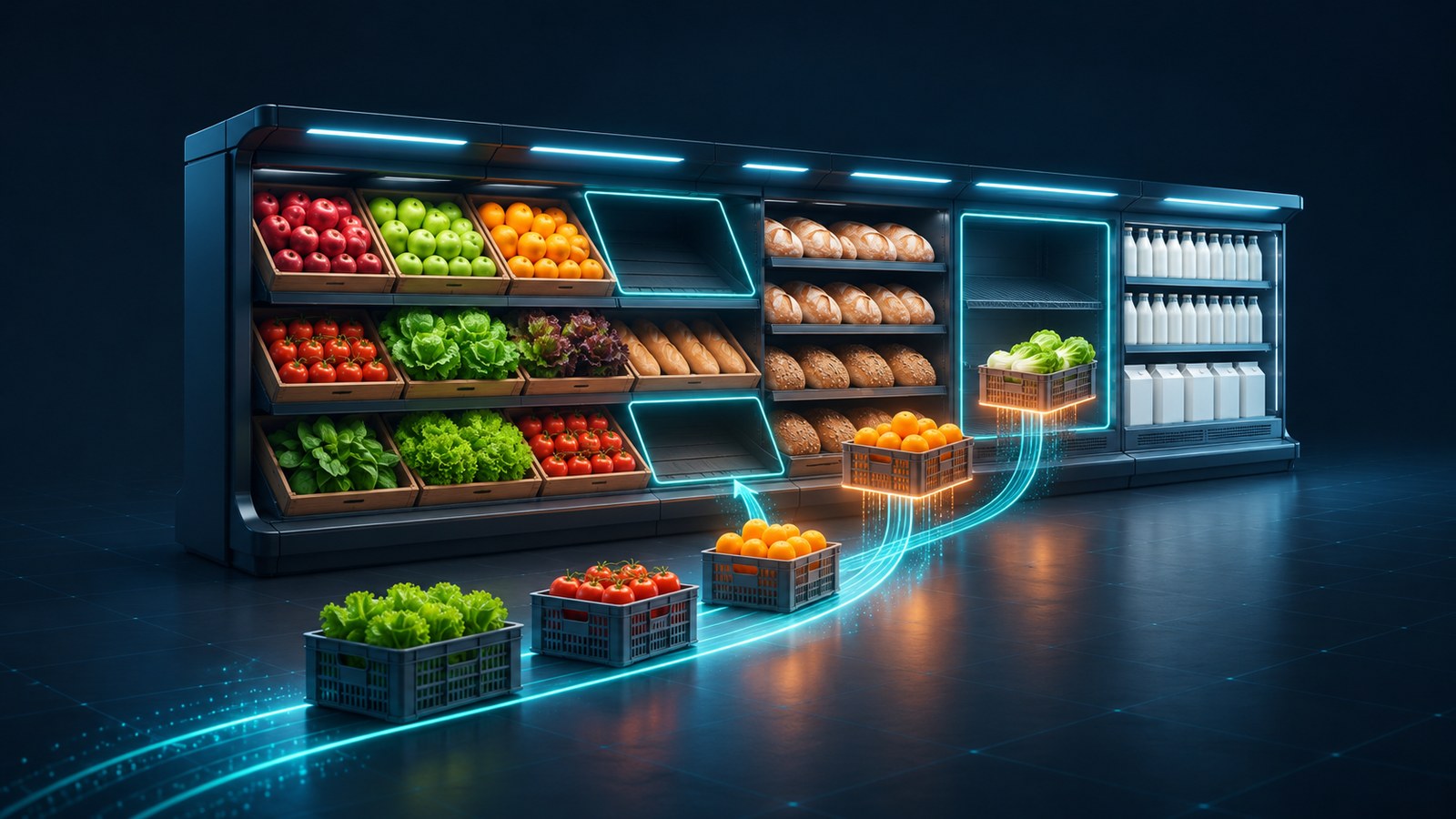
Replenishment automation for supermarket chains means the system calculates order quantities for each store and product from forecast demand, current stock, shelf life and delivery schedules, then proposes the orders without manual spreadsheets. It matters most for fresh and perishable items, where over-ordering creates waste and under-ordering leaves empty shelves.
How automated replenishment works
For each store and product, the logic follows the same steps:
- Forecast demand for the period until the next delivery arrives, including promotions, holidays and weather.
- Subtract stock on hand and stock already on order.
- Add a safety buffer sized to demand variability and supplier reliability.
- Round to pack sizes and respect minimum order quantities and delivery days.
- For perishables, cap the order by remaining shelf life so stock can sell before it expires.
What the system needs
Store-level sales data, current inventory, supplier lead times and order schedules, the promotion calendar, product shelf life, and pack and case sizes. Inventory records that are wrong in the store are a common cause of poor automated orders, so count accuracy deserves attention before go-live.
Where automation stops
New products, large promotions, supply disruptions and local events still need planner judgment. Good systems flag exceptions instead of silently ordering, and let planners override with a recorded reason.
How to measure it
Track shelf availability, waste or spoilage, forecast bias, and how often planners override suggested orders. A falling override rate with stable availability means the logic is earning trust.
How Klibre approaches replenishment
Klibre's in-season module includes replenishment, shelf life analysis and loss sales analysis. RNV describes shelf life analysis as tracking how long products remain sellable and spotting aging stock early to protect margins and reduce waste, and lists fresh product management among in-season uses. RNV has also published a whitepaper on food and perishables that describes replenishment recommendations built from demand changes, sell-through, waste thresholds and store capacity.
RNV states that Klibre connects to existing ERP, POS and inventory systems, with four weeks from integration to go-live. RNV also states that recommendations are explainable and the team keeps control of execution. Klibre is also used in food retail: RNV works with La Lorraine Bakery Group in frozen bakery products.
FAQ
How is supermarket replenishment different from fashion replenishment?
Grocery products sell daily, expire, and are ordered on fixed delivery cycles, so shelf life and order timing drive the decision. In fashion, sizes and short collections matter more.
Can replenishment be fully automated?
For Klibre, RNV states that replenishment recommendations are approved in one click and the team keeps control of execution.
Does it replace store ordering by staff?
It replaces manual calculation, not accountability. Store staff and planners review exceptions and correct inventory errors.
What should we fix before automating?
Inventory record accuracy, clean supplier lead times and a reliable promotion calendar. See also how store-level demand forecasting works.
Next step
See how replenishment fits into the season on the in-season planning page, learn more about Klibre, or talk to RNV.